Behind the Scenes at Oscar’s Place: A Deep Dive into Donkey Rescue and Care
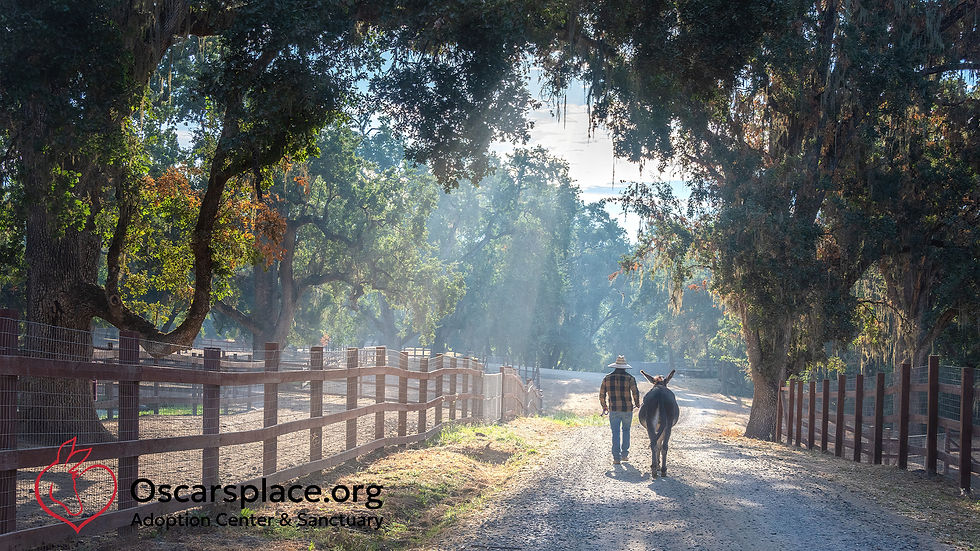
Donkey rescue operations face unique challenges that require specialized knowledge and tools. At Oscar’s Place, a sanctuary caring for around 250 donkeys across two locations in California, the daily work involves more than just sheltering these animals. It includes managing herd health, preventing disease outbreaks, and providing urgent care when needed. We recently had the chance to speak with the supervising veterinarian at Oscar’s Place about how they approach donkey care, especially their use of Serum Amyloid A (SAA) testing to detect illness early in a population known for hiding symptoms.
Can you tell us a bit about Oscar’s Place and the scope of donkey care you manage day to day?
Oscar’s Place is a donkey rescue that houses ≈250 donkeys currently between our two locations in Hopland and Potter Valley, California. Our donkeys come to us via two different routes—rescued from slaughter via the auction pipeline and also from loving families who are no longer able to care for them. Once in our care, we address any health issues they have and then work to rehabilitate them either into our general population to live out their lives in our pastures or adopt them out to new families seeking donkey companions. My work as the supervising veterinarian involves a mix of population medicine—herd health, preventive care, and disease mitigation—as well as urgent/emergent care for illness and injury that arise. With cases coming from auctions and other communal housing environments, this involves a lot of infectious disease surveillance and biosecurity practices in addition to treatment of sick donkeys in order to protect the existing herd.
What initially drew you to using SAA testing, particularly for a large and diverse donkey population?
I leaned heavily on SAA in my previous jobs—both in private practice and as the equine ambulatory clinician at Oregon State. When you are out in the field and need to triage/make decisions on the farm, having the insight of SAA in conjunction with my physical exam and imaging diagnostics is hugely helpful. Similarly here in Hopland, we want prompt answers to diagnostic questions so that we can initiate prompt care. Donkeys are amazingly stoic and often do not reveal their illness until they are very sick—anything that can help us detect disease sooner rather than later is tantamount to maintaining a healthy herd.
Were there any early questions or hesitations about using SAA in donkeys versus horses?
Yes! I have struggled to find literature that reassures me values can be trusted and interpreted in donkeys comparably to horses. Not all equids are equal. Donkeys have different reference intervals and physiological responses to disease that can be different than horses. It still involves a little bit of a leap of faith to “rely” on SAA readings, but as always, we use it as a part of clinical assessment and hope that the data we are collecting over time can provide more certainty in the values as we go along.
How are you currently using SAA testing for screening and monitoring across your donkey population?
When donkeys arrive from long distances, we perform SAA testing (among other things) on them at intake as well as at scheduled intervals over time until they recover. This is part of how we are building a better understanding of SAA response in donkeys but also trying to detect disease when clinical signs aren’t manifesting outwardly (as donkeys “hide their feelings” well).
Additionally, we run SAA as part of our minimum database collection on any donkey that presents with respiratory symptoms, fever, diarrhea, and/or the “ADR” condition. Frequently, we use the SAA to track response to treatment thereafter as well.
How has SAA testing helped with intake, quarantine, or managing new groups of donkeys coming into the herd?
With rescues, we track the SAA at regular intervals on the whole rescued herd (sometimes 10 - 45 donkeys). We collect this information in conjunction with vital signs and thoracic ultrasound imaging. It helps direct treatment decisions as well as flags donkeys who may need additional diagnostics/closer monitoring. Recently we were also able to track viral loads of common respiratory pathogens in donkeys in both nasal swabs and whole blood at the same time points as our SAA readings. I am hopeful this data can help reveal a better understanding of the diseases as well as the donkey’s inflammatory response.
Have you noticed any patterns in how SAA behaves in donkeys during treatment and recovery?
Overall, my impression is that SAA trends are comparable in donkeys to the horses of my past experience. This is very anecdotal, but SAA does seem a little slower to rise as high and decrease than it did in horses, but perhaps that is just the nature of the diseases we are seeing here versus in horses (largely pneumonia—both viral and bacterial). I can say that with viral pneumonias, the SAAs have been minimally elevated, and in the later phases of bacterial pneumonia (or even before they recover), SAA values have been <20. Generally, when the fevers are still lingering, the SAAs are still high.
Can you share an example of how a normal or low SAA result has been helpful?
A normal or low SAA after an upward trend is very reassuring in the course of antibiotic therapy. It is also reassuring when you anticipate the disease is viral rather than bacterial and it seems to peak and drop faster (in my experience) with viral vs. continuing to rise with bacterial. Because we have had some unfortunate experiences with circulating herpesviruses here, those trends are very helpful, as we can’t always have PCR testing confirmed as quickly as we’d like (especially on a weekend or holiday!).
What would you say to other donkey rescues or veterinarians who are considering SAA testing but aren’t sure yet?
As with any diagnostic, it must be taken into account with the whole clinical picture, but for a species that likes to fog that clinical picture with the utmost stoicism and masking of disease, SAA can be your best detective friend.
Is there anything else you’d like to share about how diagnostics like SAA support better welfare outcomes for donkeys?
The more we utilize it and other diagnostics to establish norms and reference parameters, the better we will understand donkeys! Donkeys deserve to be better understood.
Want to connect with the team at Oscar's Place? You can find them at:
Oscar's Place Adoption Center & Sanctuary
4425 Hwy 175
Hopland, CA 95449
Phone: 707-530-6711
Website: oscarsplace.org



The Football Bros retro-inspired design works especially well with the chaotic arcade gameplay. Everything feels focused on movement, scoring, competition, and creating memorable moments rather than unnecessary complexity.